Closing five chapters may prompt start of Accession Treaty drafting
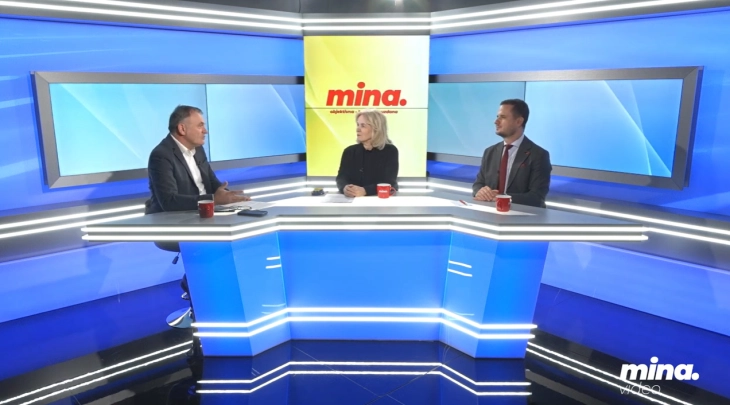
Podgorica, (MINA) – Closing five negotiation chapters at the Intergovernmental Conference in Brussels could influence the Council to recommend that the European Commission (EC) begin drafting the Accession Treaty, which would represent a political signal from the member states that they are preparing for Montenegro to conclude its negotiation process.
This was assessed by former Minister of European Integration Gordana Djurovic and Montenegro’s Chief EU Negotiator Predrag Zenovic in an interview with the MINA News Agency.
Djurovic argued that the failure to elect all Constitutional Court judges at the Parliament’s session was a missed opportunity at a time when none should be wasted.
She said that several factors contributed to the failure to elect all judges, including political relations among the parties in the parliament, the conduct of the parliament’s session and the way the agenda item was introduced by the Parliament Speaker.
Zenovic said that at the level of principle, it is essential that the heads of all institutions, especially those that fundamental to the rule of law, be elected on time, without delay, and that those institutions operate at full capacity.
He added that it is not yet known exactly when the Intergovernmental Conference will be held, but that it will take place between December 15 and 18, and that the closing of five chapters, which is expected at the Intergovernmental Conference, is in line with the accession process dynamics.
Asked how significant a step it would be, Djurovic said that there is still a lot to be done, but that if 2026 is considered the year for completing the negotiations, the Intergovernmental Conferences should be held quarterly.
She believes that it would be beneficial to further advance electoral reform and to open the discussion on amending the Constitution.
Zenovic believes that there is still time to amend the Constitution, but not too much, and that at least two areas should be amended to align with European standards.
“The membership of the Minister of Justice in the Judicial Council is problematic from several points of view, which is confirmed by both the Venice and European Commissions. Another issue is the definition of the Central Bank, which should be adapted to the role, function and meaning that central banks have in the modern EU”, explained Zenovic.
Speaking about chapter 31 – Foreign, Security and Defense Policy, he said that Croatia blocked its closure, but not the negotiations themselves, which is important.
“The negotiations are in the hands of Zagreb and Podgorica, the Ministries of Foreign Affairs, and are proceeding in a way appropriate for this kind of bilateral challenges. We in the negotiating structure are awaiting the results of that dialogue in order to close the Chapter 31, for which Montenegro has fully met the criteria”, Zenovic added.
Djurovic said that the issue of bilateral relations is complex, because the internal political pulse in Montenegro, presented through various actors, can contribute to prolonging the blockade.
She assessed that it is not a problem if all negotiation chapters are not closed next year and and if the process extends a few months into 2027.
“The decision to draft the accession treaty would be a big and symbolic milestone if we are close to the end of the negotiations. The decision by the Council to recommend the EC to start drafting the accession treaty would make the process significantly more realistic and serve as a warning to everyone in the country to take advantage of this open door for Montenegro”, Djurovic pointed out.
Zenovic said that the position of the EC, is that once an adequate number of closed chapters is achieved, the drafting of the accession treaty can start.
“I think that this Intergovernmental Conference will provide enough substance to initiate the working group and begin drafting the agreement, since the process is demanding and long-lasting, and that is why it is better to start as soon as possible”, said Zenovic.
When asked whether if Montenegro could join the EU with a temporary restriction of its right of veto, Zenovic replied that Montenegro should not be offered anything other than what the founding treaties provide at the moment, because it shows that it can be a credible and equal member both in the rule of law and foreign policy.
“I believe that this is a fundamental European principle and I believe that Montenegro will not present any problem for the EU, but, on the contrary, that it will bring opportunities and send a message that enlargement is still the EU’s strongest foreign policy”, added Zenovic.
Djurovic added that comparative practice does not recognize the exemption regarding the decision-making process under the EU treaties.
“The strictest norm was perhaps applied in case of Romania and the Bulgaria, who received the so-called Cooperation and Verification Mechanism for Chapters 23 and 24 after joining the EU and they agreed to it”, said Djurovic.


