Next year to mark a major turning point for CEFTA
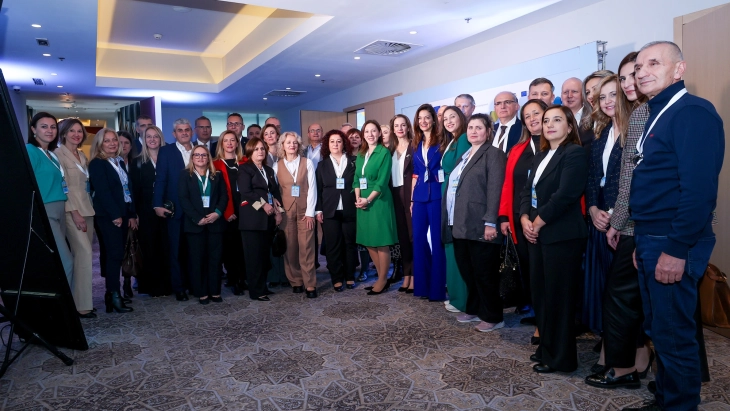
Sarajevo, (MINA-BUSINESS) – According to Director of the CEFTA Secretariat Pranvera Kastrati, next year will mark a major turning point for CEFTA – the shift from assumed obligations to their full implementation.
“Electronic certificates, risk-based controls, and real-time data exchange will become the new normal, improving efficiency, reducing costs, and boosting the competitiveness of farmers and exporters across the CEFTA region,” Kastrati said at the regional conference “Safe Trade, Strong Growth: Improving Agri-Trade in the CEFTA Region”, held in Sarajevo.
Reflecting on the concrete results of CEFTA’s digital pathway, Kastrati shared a strong message about the practical impact of the CEFTA agreement.
“Intra-CEFTA trade in fruits and vegetables reached € 233.1 million last year, which is an increase of 9.11 percent compared to the previous year, and an impressive growth of 154.7 percent compared to 2014, now accounting for 9.85 percent of total CEFTA trade in agricultural products,” Kastrati specified.
She explained that this success is the result of specific reforms introduced by the CEFTA Decision on Facilitating Trade in Fruits and Vegetables, which significantly reduced unnecessary controls, accelerated digitalization, and strengthened food safety and plant health systems.
The conference was hosted by Bosnia and Herzegovina, within the framework of its chairmanship of the CEFTA Subcommittee on Agriculture and SPS, and the event served as an important platform for strengthening regional cooperation and supporting greater alignment with EU standards in the field of agri-food products and SPS (sanitary and phytosanitary) measures.
The conference was organized by the SEED+ initiative, implemented by the CEFTA Secretariat and funded by the European Union (EU), in partnership with the EU4Trade project, carried out by GIZ on behalf of the German Federal Ministry for Economic Cooperation and Development (BMZ), with co-funding from the Union.
The event highlighted the region’s shared commitment to safer and more integrated trade in agri-food products.
Director of the Food Safety, Veterinary and Phytosanitary Affairs Administration of Montenegro, Vladimir Djakovic, said that CEFTA has achieved visible progress in developing a functional regional market, particularly through improving cooperation among relevant authorities and introducing electronic data exchange.
“The success of SPS systems is based on trust and strong institutional capacities. Montenegro strongly supports strengthening inspection services ensuring that products meet the same requirements as those on the EU market. We are committed to sharing our experiences from the EU accession process, because regional cooperation, knowledge exchange, and harmonized rules bring concrete economic benefits: lower costs, faster movement of goods, and greater competitiveness,” Djakovic said.
The conference confirmed the shared ambition of CEFTA parties to strengthen the Common Regional Market, improve competitiveness, and deepen cooperation with the EU.


