Results of the Needs Assessment project presented in Brussels
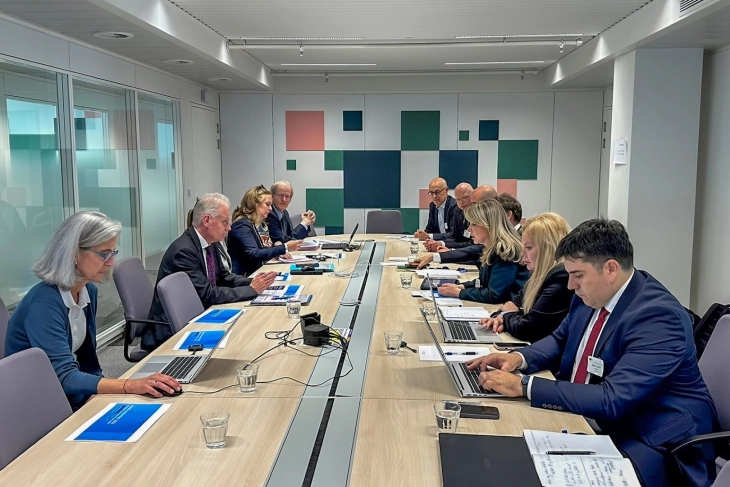
Podgorica, (MINA-BUSINESS) – It was concluded at a meeting in Brussels that the Needs Assessment Project, which evaluates the readiness of the Central Bank of Montenegro (CBCG) to align with the standards of the European System of Central Banks (ESCB) and the Eurosystem, is an important contribution to Montenegro’s overall preparedness for the next phase of European integration.
The CBCG delegation, led by Governor Irena Radovic, met with Gert Jan Koopman, Director-General of the Directorate-General for Enlargement and the Eastern Neighbourhood (DG ENEST) at the European Commission in Brussels.
The meeting was also attended by representatives of the partner central banks leading the Needs Assessment Project – the Dutch Central Bank and the National Bank of Belgium.
According to a press release from the CBCG, project results were presented at the meeting, including its findings and recommendations for the further strengthening of the CBCG’s institutional, operational, technological and human capacities, which are necessary for its full integration into the ESCB and future participation in the Eurosystem.
“It was assessed that the project represents one of the most important pillars of the CBCG’s institutional transformation in Montenegro’s European Union accession process, providing a comprehensive framework for further alignment with ESCB standards, practices and requirements,” the press release reads.
Koopman welcomed the progress achieved through the implementation of the project, noting that it constitutes an important contribution to Montenegro’s overall preparedness for the next stage of European integration.
He particularly emphasized the importance of further strengthening institutional capacities and maintaining strong reform momentum, especially in the areas of payment systems, SEPA integration and preparations for imminent connectivity to the TIPS infrastructure, ensuring that Montenegro, in line with the accelerated pace of accession negotiations, is ready to assume the obligations arising from European Union membership and future participation in the European financial architecture in a timely and effective manner.
Radovic said that the strong support of the European Commission, together with the expertise and commitment of the partner central banks of the Netherlands, Belgium and Germany, as well as other Eurosystem central banks involved in the project, represents a key pillar of support in the CBCG’s institutional transformation process.
“This project provides the CBCG with a clear direction for the next phase of its institutional transformation. Its findings help us define with precision the priorities, resources and steps required for further alignment with the standards of the ESCB and the Eurosystem. For Montenegro, which is entering the final stage of accession negotiations, it is particularly important that the central bank is prepared not only from a regulatory perspective, but also operationally, technologically and in terms of human resources, for the role that awaits it within the European family of central banks,” Radovic stated.
The meeting reaffirmed the importance of continued cooperation between the European Commission, the partner central banks and the CBCG, as well as their shared commitment to the successful implementation of the next phase of the CBCG’s institutional alignment with ESCB standards.


