Montenegro faces the CBAM challenge
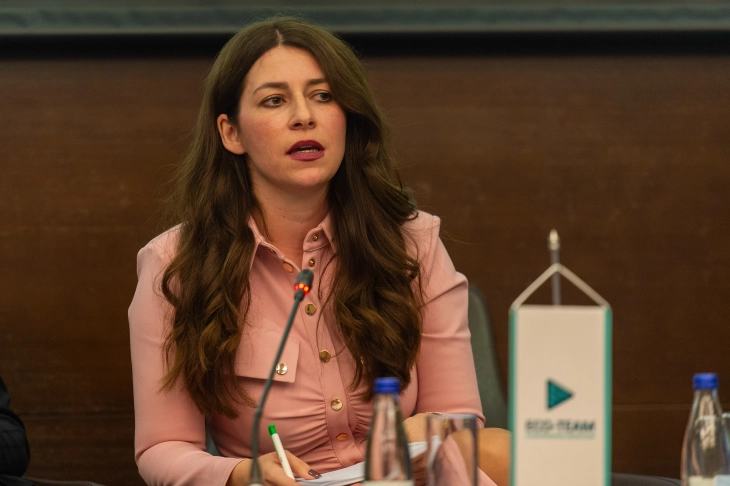
Podgorica, (MINA-BUSINESS) – According to the Eco-Team, introducing a real price for carbon dioxide (CO₂) emissions and amending the existing regulation are not merely administrative issues, but crucial steps for protecting the country’s economic interests and preserving the competitiveness of Montenegro’s energy sector.
Climate and Energy Programme Coordinator at Eco-Team Diana Milev Cavor stated that Montenegro faces a very short timeframe to align its regulatory framework with the new European rules.
“In this situation, it is very realistic to expect that electricity prices for end consumers will rise significantly more than currently anticipated,” Milev Cavor said.
On 1 January 2026, the European Union will introduce the Carbon Border Adjustment Mechanism (CBAM), which imposes an additional cost on the import of carbon-intensive goods and electricity produced from coal or other high-CO₂-emission sources.
This means that starting next year, this regulation will directly affect Montenegro’s electricity exports. Importers in the EU will have to pay an extra charge for electricity that cannot be certified as “green.” This energy will become more expensive and less competitive in the European market.
“Elektroprivreda (EPCG) will no longer be able to sell electricity at the same price as before, because the EU market will now require imported goods to include the carbon cost,” Milev Cavor said.
Energy companies in the EU already pay a CO₂ cost through the European Emissions Trading System (EU ETS), which means that CO₂ costs incurred during electricity production are already factored into the price. Montenegro has its own CO₂ emissions trading system, but the current emission price does not reflect their real cost.
“Currently, EPCG pays around €24/tCO₂, while the price on the EU ETS market is about €80/tCO₂. Therefore, an EU importer will have to pay the difference in emission costs when importing electricity. This will indirectly reduce export revenues, as EU buyers will demand lower prices to cover the additional costs,” the NGO stated in a press release.
Milev Cavor noted that electricity exports currently account for 35 percent of Montenegro’s total exports.
“Therefore, electricity exports are not just an energy sector issue. They have broad social and economic significance. CBAM is not a surprise, it was announced several years ago. Yet, to this day, Montenegro has not taken the key steps needed to reduce the negative impact on electricity exports,” Milev Cavor said.
The regulation defining the obligation of industrial companies in Montenegro to pay CO₂ emission fees was adopted in 2020 and has not been amended since. The regulation allowed certain entities, such as the Aluminum Plant (KAP), as a major polluter, to gain financially by receiving free emission allowances and selling them to EPCG, instead of being incentivized to reduce their own emissions.
“Such practice was not in line with the ‘polluter pays’ principle nor with EU Emissions Trading System (EU ETS) standards. Furthermore, an analysis of the regulation’s provisions by the Agency for the Prevention of Corruption concluded that they are not sufficiently clear and precise, i.e., they do not regulate all matters in a clear, precise, and unambiguous manner,” the press release concludes.


